
‘Children Power’ and the Future of Democracy
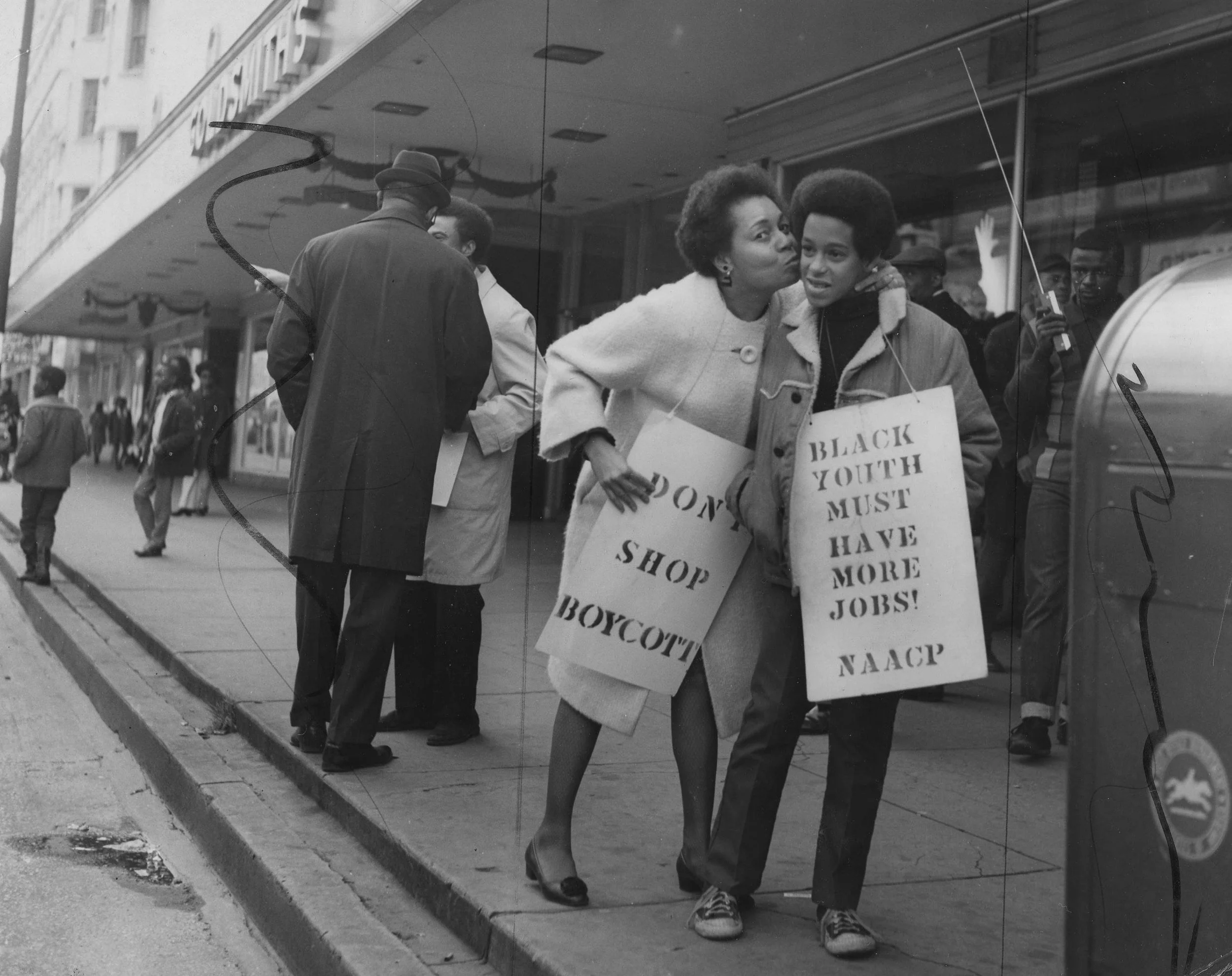
Maxine Smith and a young activist boycott businesses in Downtown Memphis during Black Monday in 1969. Photo Credit: Memphis Public Library & Information Center
More than 200 public and private schools nationwide have experienced student-led walkouts during the 2025–26 school year, and that number will surely climb as May Day approaches on Friday, May 1. On May Day, or International Workers’ Day, organizers are calling those who oppose the global rise of authoritarianism to “rally, march, and plan a day of no school, no work, no shopping.” The recent surge in youth organizing stands as one of the most encouraging signs in the fight to defend democracy. Two Harvard professors have shown that nonviolent campaigns with strong youth participation are more than twice as likely to succeed as those without it. Furthermore, research in child development demonstrates that activism builds critical consciousness, a protective factor that empowers youth with the tools to face challenges without losing their sense of agency. Simply put, youth sustain movements, and movements shape youth, a truth that history has repeatedly affirmed. Read More on Substack